What Guests Appreciate Most in a Bar With Private Room
There is a reason people keep coming back to a good bar with private room, and it is not only about exclusivity. Privacy helps, of course, but privacy on its own is not enough to create a memorable night. Guests notice something more practical and more human. They appreciate feeling looked after without being hovered over. They want the energy of a bar, the comfort of a defined space, and the ease of hosting without managing every detail themselves.
That balance is harder to achieve than many operators realize. A private room can look perfect in photos and still disappoint in practice. I have seen beautiful spaces fail because the acoustics were harsh, the service felt detached, or the room was too cut off from the atmosphere people expected. I have also seen relatively simple rooms become favorites because the layout worked, the drinks arrived on time, and the staff understood the rhythm of a private gathering.
Guests are often generous when a venue gets the fundamentals right. They rarely ask for extravagance. They tend to remember a handful of things: whether conversation felt easy, whether the room matched the occasion, whether ordering was smooth, and whether everyone in the group felt included. Those details shape the reputation of a private space far more than velvet ropes or decorative walls ever will.
The room should feel separate, not isolated
The first thing guests appreciate is a sense of having their own space without losing the social appeal of being out. A private room that feels like a sealed box can flatten the mood. People usually choose a bar, rather than a conference suite or banquet hall, because they want some life around them. They want a degree of separation, not exile.
This matters for everything from birthday parties to client gatherings. A team celebrating a successful quarter may want to talk candidly, make a toast, and take over the music for a while, but they still want to feel connected to the evening outside the door. A family hosting an engagement celebration wants privacy for speeches and photos, but also enjoys hearing the room buzz when guests step out for a drink at the main bar. The best private rooms let people move between intimacy and atmosphere without friction.
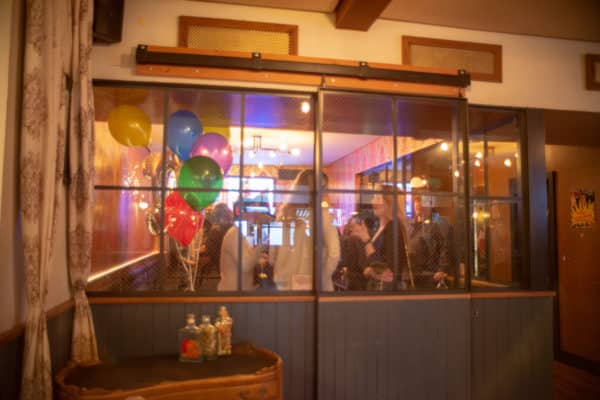
Design plays a large role here. A room with a proper door, partial glazing, or a slightly elevated position often works well because it creates a boundary while preserving context. Heavy curtains can feel romantic for some occasions, but if they muffle all sound and block all visual connection, the room can drift into feeling detached. Guests may not express this in technical terms, yet they feel it almost immediately. They relax when the room feels intentional and connected.
Comfort is more than seating and square footage
When hosts book a bar with private room, they usually start by asking about capacity. That makes sense, but guests care far more about usable comfort than the maximum number printed on a floor plan. A room listed for 30 can feel generous with 18 standing and mingling, or cramped with 24 trying to hold drinks, chat, and reach a buffet table. Capacity tells you what is possible. Comfort tells you whether people will enjoy it.
Seating should fit the event, not just fill the room. Fixed banquettes can be excellent for casual gatherings because they create a natural home base. They are less useful if people need to circulate freely or if an older group needs supportive chairs with easier access. High cocktail tables can energize a room, though they are not ideal for guests in heels after two hours or anyone with mobility concerns. Low seating looks stylish but can make food service awkward. Good venues know this and ask what the occasion actually is before finalizing the setup.
Temperature is another detail guests notice instantly. A packed room warms up fast, especially when the door stays closed and people are drinking. If the room runs hot, no amount of good service can fully compensate. On the other side, overaggressive air conditioning can make a room feel sterile. Guests rarely compliment climate control, but they absolutely remember when it is wrong.
The same applies to restroom access. If the private room is elegant but requires guests to weave through a crowded main floor, wait near a service station, or navigate stairs with drinks in hand, the friction adds up. Convenience is part of comfort. Guests may only make that trip a few times during the night, but those transitions shape how effortless the event feels.
Sound can make or break the night
Acoustics are one of the least glamorous parts of hospitality, and one of the most important. Ask people what they value in a private bar space and they often mention atmosphere, service, or drinks first. Yet if they cannot hear each other without leaning in every minute, the experience deteriorates quickly.
The issue is not simply volume. It is how sound behaves in the room. A private room with hard surfaces, bare walls, and a low ceiling can create sharp reflections that turn normal conversation into strain. A room too close to speakers from the main bar may absorb all the bass and none of the charm. https://rowanjgbd668.capitaljays.com/posts/how-to-make-your-next-event-shine-at-a-bar-with-private-room If a venue hosts sports screenings nearby, guests in the private room may find themselves hearing bursts of commentary at the worst possible moments, right in the middle of speeches or introductions.
People appreciate spaces where they can choose the mood. For some groups, that means a playlist at a level that allows easy conversation. For others, especially later in the evening, it means the option to raise the energy without disrupting the rest of the venue. Flexibility matters more than a default setting.
A good operator will discuss sound early, especially for events with presentations, speeches, or older guests. It is not unusual for a room that works brilliantly for a 25th birthday to be a poor fit for a networking event where names and titles need to be heard clearly. Guests may forgive a lot, but they are less forgiving when they spend half the night repeating themselves.
Service should feel present, not intrusive
Private events live or die on pacing. Guests do not want to chase staff for every round, and they do not want constant interruptions either. They appreciate service that reads the room. That means noticing when a host is about to make a speech, when a group has shifted from arrival drinks into food, or when one side of the room is running dry while the other barely touched its first round.
This is where experienced teams separate themselves. In a standard bar setting, the flow is shared across the floor. In a private room, the service rhythm is narrower and more visible. Delays stand out. Empty glassware piles up faster. A single missing order can affect the whole group because everyone notices the pause. Guests value staff who seem to anticipate these pressure points.
One of the most appreciated features is a clear point of contact. It does not have to be a dedicated event manager for every booking, but it helps immensely when the host knows exactly who to speak to and that person knows the plan. Confusion creates anxiety, especially for hosts who are entertaining clients or coordinating a family event with mixed generations.
Guests also notice whether staff understand discretion. In many private gatherings, people want warmth and personality, but not performance. A wedding after-party might welcome some playful banter. A senior leadership dinner may require a more restrained style. Good hospitality teams adjust their presence without making it feel scripted.
Drinks matter, but ease matters more
It may sound odd to say this about a bar, but guests often care as much about access to drinks as the drinks themselves. Of course quality matters. Nobody forgets a poorly made martini or flat sparkling wine. Still, the appreciation guests express most often is for how simple the ordering process felt.
If every order has to be relayed through the host, frustration builds. If guests have to leave the room and queue at the main bar, the point of having a private space starts to weaken. A service window, an in-room bartender for larger groups, or regular rounds from a dedicated server can change the mood completely. These systems reduce waiting, and more importantly, they keep the gathering together.
Hosts especially appreciate drink packages or pre-arranged menus when they are designed sensibly. The best packages are not bloated with options no one wants. They include a few strong choices across categories, a decent non-alcoholic selection, and a straightforward policy for upgrades. Guests feel looked after when they are not forced into either an overly restrictive package or an open tab with no cost visibility.
The rise of alcohol-free drinking has made this part of the experience more important than it used to be. A group can include drivers, pregnant guests, people training early the next day, or simply people who do not drink. In a quality bar with private room, these guests should not feel like an afterthought. A well-made zero-proof spritz, a good botanical option, or even thoughtful soft drink service changes the social dynamic. It lets everyone participate without explanation.
Food should support the gathering, not dominate it
Not every private room booking needs food, but many benefit from it. What guests appreciate most is appropriateness. A menu should match the occasion, the timing, and the room itself. Small plates that work in a lounge setting may be perfect for after-work celebrations and completely wrong for an event where people skipped dinner and expect something substantial.
The practical side matters. Finger food sounds convenient until it turns greasy, fragile, or impossible to balance with a drink in hand. Shared platters can create a warm, social atmosphere, but only if there is enough surface space and a sensible replenishment plan. Seated dining can work well in some private rooms, though it changes the energy and often reduces capacity significantly. Guests value honesty from venues about what the space handles well.
A simple rule applies here: the less logistical effort guests need to spend on eating, the more successful the event feels. Nobody wants to wrestle with a slippery canapé while greeting a colleague. Nobody wants the room rearranged mid-event in a way that stalls conversation. Good food in the wrong format can feel like poor hospitality. Solid food in the right format often earns warmer praise.
Hosts notice planning, guests notice smoothness
There is a difference between what hosts evaluate and what their guests remember, but the two are closely linked. Hosts think about deposits, minimum spend, cancellation terms, arrival timing, dietary requests, and AV access. Guests mostly think about whether the evening flowed. When the planning is handled well, the guests never see the machinery.
That is why clarity before the event matters so much. The strongest venues set expectations early and in plain language. They explain what is included, when the room becomes available, how tabs can be split, whether decorations are allowed, and what happens if the group size changes. This prevents the awkward surprises that can sour an otherwise good night.
From the guest perspective, smoothness often shows up in small transitions. Coats have somewhere sensible to go. Early arrivals are welcomed instead of parked uncomfortably at the entrance. The birthday cake appears when expected. The microphone works. The tab does not turn into a negotiation at the end of the evening. These moments look simple from the outside. Operationally, they require attention and discipline.
Guests rarely praise logistics directly, yet they reward them with repeat bookings. One well-run engagement party often leads to a christening lunch, a retirement celebration, or a company holiday event the following year. People trust spaces that make hosting look easy.
The room should match the reason people gathered
One common mistake is assuming a private room is a one-size-fits-all asset. In practice, guests appreciate spaces that suit the purpose of the event. The same room can feel excellent for one occasion and off-key for another, depending on how it is used.
A birthday gathering often benefits from flexibility. People arrive in waves, mingle, pose for photos, and may stay later than planned. A corporate drinks reception usually needs clearer service flow, stronger acoustics, and perhaps a more polished first impression. A family milestone event may place greater importance on seating, accessibility, and a menu broad enough for different ages and preferences.
Experienced venues ask better questions than simply, “How many people?” They want to know whether guests will be standing or seated, whether speeches are planned, whether there is a guest of honor, whether the crowd will skew older or younger, and whether the host wants a lively party feel or a quieter, more conversational mood. Guests feel the difference when a room has been prepared with the actual occasion in mind.
A bar with private room earns loyalty when it adapts rather than forcing every group into the same template. That can mean changing the lighting level, adjusting the furniture layout, simplifying the menu, or assigning an extra staff member for the first hour. None of these changes are flashy. All of them are felt.
Guests remember the details that remove friction
When people talk afterward about a private event that went well, they usually do not describe every component. They say it felt easy. That word carries a lot of weight in hospitality. Easy means no one struggled to find the venue, no one waited too long for a drink, no one shouted all night to be heard, and the host got to enjoy the occasion instead of troubleshooting it.
A few practical details tend to stand out:
- Clear arrival instructions, especially if the private room has a separate entrance or sits above the main bar.
- Enough surfaces for drinks, plates, and personal items, particularly during standing events.
- Lighting that flatters faces and supports the mood without making menus unreadable.
- Staff who know the event plan and can answer guest questions without confusion.
- A clean, polished room that feels prepared before the first guest arrives.
None of those details are glamorous on their own. Together, they create the sense that the space is under control. Guests can relax when the environment sends that signal.
Atmosphere still counts, but it has to be earned
It would be wrong to reduce the private room experience to logistics alone. Guests do care about atmosphere, and often deeply. They want a space that feels special enough to justify gathering there. Texture, lighting, music, and the overall visual identity of the room help create that feeling. A private room should offer something more memorable than a partitioned corner or a generic function space.
Still, atmosphere works best when it is supported by substance. Candles and moody lighting do not save a room with poor service. A premium back bar display means little if half the group is waiting twenty minutes for a first drink. Guests appreciate aesthetics most when the practical side of hospitality is already secure.
That is why the best bar private rooms often feel balanced rather than dramatic. They look polished, but not overly precious. They photograph well, yet they are built to be used. A stylish room with durable surfaces, sensible seating, and thoughtful circulation usually wins over a more extravagant room that looks impressive but functions poorly.
What people value after the night is over
When guests look back on a gathering in a bar with private room, their strongest impressions usually come from how the place made them feel. They felt comfortable speaking freely. They felt included. They felt the event had a little occasion to it without becoming stiff. They felt the host had chosen well.
That is the standard every private space should aim for. Not merely to be exclusive, but to make social time work better. Not just to separate a group from the crowd, but to give them the best parts of going out without the usual compromises.
If a venue can provide privacy, strong service, easy conversation, reliable drinks, and a room that fits the event, guests notice. They may not list each element one by one. They simply say they had a great night, and they mean it. In hospitality, that is the clearest sign that the private room delivered what mattered most.
The Winslow
Address: 243 E 14th St, New York, NY 10003
Phone number: +12127777717
FAQ About Bar With Private Room
Which bars in NYC offer private rooms?
Many bars in New York City offer private and semi-private rooms for parties and events, ranging from hidden basement speakeasies to upscale lounge spaces. Top options include The Back Room on the Lower East Side, Dear Irving Gramercy, Pebble Bar in Midtown, Mister Paradise in the East Village, and The Winslow in the East Village.
What is a private room in a pub called?
A small, private seating area or partitioned booth in a traditional pub is most commonly called a snug. Larger private rooms used for events, parties, or dining are typically referred to as private dining rooms, function rooms, or back rooms.
How much does a 2 hour open bar cost?
A 2-hour open bar generally costs between $15 and $45 per person, depending heavily on the quality of alcohol you choose. For a standard group of 100 guests, this translates to an overall cost of $1,500 to $4,500 before taxes, setups, and staff gratuities.